
AVIT BANSAL
AUTHOR, SPEAKER & MANIFESTATION TEACHER
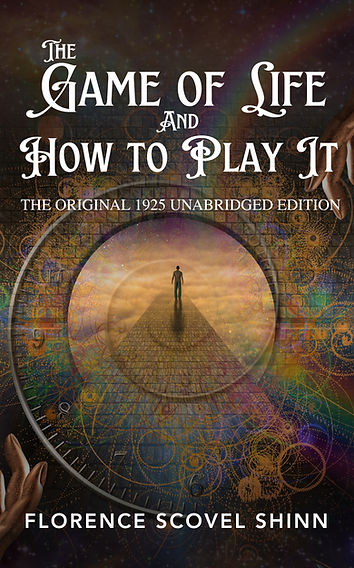
THE GAME OF LIFE AND HOW TO PLAY IT: The Original 1925 Unabridged Edition
.jpg)
By: Florence Scovel Shinn | Edited By: Avit Bansal
The Game of Life and How to Play It is Florence Scovel Shinn’s classic 1925 work on spiritual laws, prosperity, the power of words, imagination, nonresistance, forgiveness, love, intuition, self-expression, and affirmations. Originally published in 1925, the book presents life as a “game” governed by spiritual laws and explores how the way we think, speak, believe, and respond to life affects our experience.
This edition presents the original 1925 text in its complete, unabridged form, preserving the original structure and teachings of Florence Scovel Shinn for readers who want to experience the work as it was originally published.
Buy Now
International Readers
Readers in India
The Game of Life and How to Play It - Florence Scovel Shinn
Florence Scovel Shinn’s The Game of Life and How to Play It was first published in 1925 and became one of her best-known works. The original book contains ten chapters covering spiritual law, prosperity, words, nonresistance, karma, forgiveness, love, intuition, self-expression, and affirmations.
Shinn opens the book by presenting life not as a battle, but as a game that cannot be successfully played without an understanding of spiritual law. She connects this idea with the biblical principle of giving and receiving and develops it throughout the book through examples, stories, spiritual principles, and affirmations.
The book is not limited to prosperity or material success. Its chapters also explore the power of the spoken word, the importance of nonresistance, forgiveness, love, intuition, divine guidance, and what Shinn calls Perfect Self-Expression and the Divine Design.
It is one of the most sought after Manifestation books.
ABOUT THE ORIGINAL 1925 EDITION
The Game of Life and How to Play It: The Original 1925 Unabridged Edition presents Florence Scovel Shinn’s original work as published in 1925.
The original publication was issued by DeVorss & Company, and the work is identified as having been published in Marina del Rey, California, in 1925.
The original contents contain ten chapters:
-
The Game
-
The Law of Prosperity
-
The Power of the Word
-
The Law of Nonresistance
-
The Law of Karma and the Law of Forgiveness
-
Casting the Burden (Impressing the Subconscious)
-
Love
-
Intuition or Guidance
-
Perfect Self-Expression or the Divine Design
-
Denials and Affirmations
This edition is intended for readers who want to read Florence Scovel Shinn’s original teachings rather than a modernized adaptation, rewritten version, or contemporary interpretation.
THE CHAPTERS OF THE GAME OF LIFE AND HOW TO PLAY IT
The original The Game of Life and How to Play It contains 10 chapters. The chapter titles below follow the original contents.
Chapter 1: The Game
In the opening chapter, Florence Scovel Shinn introduces the central metaphor of the book: life is a game rather than a battle.
She explains that this game cannot be played successfully without an understanding of spiritual law. Giving and receiving, according to Shinn, are fundamental principles of this game.
The chapter explores the relationship between what a person gives through words and actions and what eventually returns to them.
Shinn also introduces the importance of imagination and the subconscious, establishing several ideas that recur throughout the rest of the book.
The opening chapter therefore provides the foundation for her broader philosophy: life can be approached with greater understanding when its spiritual principles are recognized.
Chapter 2: The Law of Prosperity
The second chapter focuses on prosperity. Shinn presents prosperity as more than simply possessing money. The chapter discusses supply, faith, giving, receiving, and the mental attitude with which a person approaches abundance.
Rather than treating prosperity solely as an external condition, Shinn connects it with a person's spiritual understanding and expectations.
The chapter develops the idea that fear, limitation, and a sense of lack can interfere with one's experience of prosperity, while faith and an understanding of spiritual supply can lead toward a different experience.
Chapter 3: The Power of the Word
In the third chapter, Shinn turns to one of the central themes of her work: the power of words. She gives considerable importance to what a person speaks, emphasizing that words are not merely descriptions of circumstances.
Within Shinn's metaphysical framework, spoken words can influence consciousness and the conditions a person experiences.
The chapter therefore examines the consequences of speaking from fear, limitation, criticism, or doubt, while also presenting the use of affirmative statements and words of faith.
This chapter helps establish why affirmations became such an important part of Shinn's teachings.
Chapter 4: The Law of Nonresistance
The fourth chapter presents The Law of Nonresistance.Shinn explores the idea that resisting an unwanted condition through fear, anger, or continual mental struggle can give additional attention and power to that condition.
Instead, she advocates a different response based on faith and nonresistance.
Nonresistance in Shinn's teaching does not simply mean doing nothing. Rather, it involves releasing excessive resistance and allowing a different spiritual principle to operate.
The chapter develops this idea through examples and situations involving fear, conflict, circumstances, and desired outcomes.
Chapter 5: The Law of Karma and the Law of Forgiveness
The fifth chapter brings together two related subjects: karma and forgiveness. Shinn discusses the principle of cause and effect and the consequences that can follow from a person's actions and words. She then connects this with forgiveness.
Forgiveness becomes important because resentment, anger, and condemnation can keep a person mentally connected to an unwanted experience.
Through forgiveness, Shinn presents the possibility of releasing these patterns and moving beyond them.
The chapter therefore explores consequences, responsibility, forgiveness, and release within her spiritual framework.
Chapter 6: Casting the Burden (Impressing the Subconscious)
The sixth chapter is titled “Casting the Burden (Impressing the Subconscious).” Here Shinn explores the idea of releasing worries and burdens rather than continuously carrying them through fear and mental effort.
The chapter also discusses the subconscious and the process of impressing an idea upon it. Faith, surrender, suggestion, and the subconscious are brought together as part of Shinn's approach to changing one's experience.
The idea of casting the burden represents a movement away from anxiety and excessive effort and toward trust in a higher spiritual power.
Chapter 7: Love
The seventh chapter is simply titled Love. Shinn presents love as an important spiritual principle rather than limiting the subject to romantic relationships.
The chapter explores love in relation to other people, relationships, harmony, and one's mental attitude toward others.
Shinn's treatment of love is connected with the broader principles of giving, receiving, forgiveness, and spiritual harmony developed throughout the book.
Chapter 8: Intuition or Guidance
The eighth chapter examines intuition and guidance. Shinn suggests that a person should not rely exclusively upon intellectual reasoning when making important decisions. Instead, she gives importance to intuition and what she describes as spiritual or divine guidance.
The chapter explores the idea that the right course of action may not always be obvious from external circumstances or ordinary reasoning.
Learning to recognize and follow inner guidance therefore becomes another part of what Shinn considers successfully playing the game of life.
Chapter 9: Perfect Self-Expression or the Divine Design
The ninth chapter is titled “Perfect Self-Expression or the Divine Design.” Here Shinn explores the idea that each person has a particular form of perfect self-expression.
Rather than simply attempting to reproduce another person's life or success, she suggests that an individual should discover and express what is right for them.
The concept of the Divine Design is connected with one's talents, purpose, relationships, work, and overall direction in life.
The chapter encourages readers to seek their own ideal expression rather than measuring their lives solely against the circumstances of others.
Chapter 10: Denials and Affirmations
The final chapter is Denials and Affirmations. This chapter brings together the practical use of the ideas developed throughout the book.
Shinn discusses the use of denials to reject the power or permanence of unwanted conditions and affirmations to consciously state a desired spiritual truth.
The chapter contains affirmative statements related to different areas of life and demonstrates how Shinn applies her principles through words.
It provides a practical conclusion to the book's discussion of spiritual law, belief, speech, expectation, and consciousness.
WHAT DOES THE GAME OF LIFE AND HOW TO PLAY IT TEACH?
Florence Scovel Shinn's book brings together several recurring principles:
-
Spiritual laws
-
Prosperity and supply
-
Giving and receiving
-
The power of words
-
Imagination
-
Nonresistance
-
Karma
-
Forgiveness
-
The subconscious
-
Love
-
Intuition
-
Divine guidance
-
Perfect self-expression
-
Divine Design
-
Denials
-
Affirmations
These ideas are not presented as a modern manifestation system. They belong to Shinn's own early twentieth-century metaphysical framework, which draws extensively on spiritual and biblical language. The original text itself repeatedly refers to spiritual law and biblical teachings.
WHY READ THE ORIGINAL 1925 EDITION?
Many modern editions of Florence Scovel Shinn's work present her ideas through contemporary language, commentary, interpretations, or additional material.
The Original 1925 Unabridged Edition offers something different: the opportunity to encounter Shinn's work in its original form.
The original publication contains the ten chapters that make up the complete work, including The Game, The Law of Prosperity, The Power of the Word, The Law of Nonresistance, The Law of Karma and the Law of Forgiveness, Casting the Burden, Love, Intuition or Guidance, Perfect Self-Expression, and Denials and Affirmations.
For readers interested in Florence Scovel Shinn's teachings, reading the original text makes it possible to understand her terminology, examples, spiritual references, and metaphysical framework without relying on later interpretations.
WHY READ THE GAME OF LIFE AND HOW TO PLAY IT?
If you have heard a lot about modern manifestation, affirmations, and positive thinking, Florence Scovel Shinn’s original work offers an opportunity to explore some of the earlier metaphysical ideas behind these concepts.
The Game of Life and How to Play It was first published in 1925 and presents Florence Scovel Shinn’s teachings on prosperity, the power of words, imagination, nonresistance, forgiveness, love, intuition, and affirmations.
This book is especially useful for readers who want to:
-
Understand affirmations and their use
-
Explore prosperity and abundance consciousness
-
Learn about the power of spoken words
-
Explore intuition and divine guidance
-
Understand love and relationships from a spiritual perspective
-
Learn about forgiveness and nonresistance
-
Read Florence Scovel Shinn’s original teachings
-
Explore spiritual laws and metaphysical principles
-
Discover classic metaphysical literature that predates modern manifestation
-
Read the original 1925 edition of The Game of Life and How to Play It
BOOK DETAILS
Title: THE GAME OF LIFE AND HOW TO PLAY IT : The Original 1925 Unabridged Edition
By: Avit Bansal
Original Author: Florence Scovel Shinn
Language: English
Published: MAY 4, 2026
Format: Paperback / Kindle (eBook)
Print Length: 168 Pages
Dimensions: 5 x 0.42 x 8 inches
ISBN-13: 979-8195494698
ASIN : B0GZJH5TLW

WHO SHOULD READ THIS EDITION?
If you are new to Florence Scovel Shinn, this edition provides direct access to one of her best-known works.
Readers interested in affirmations
The book contains an entire final chapter devoted to Denials and Affirmations and develops the importance of words throughout the work.
Readers interested in prosperity teachings & Manifestation
The second chapter, The Law of Prosperity, explores Shinn's ideas about supply, abundance, faith, giving, and receiving.
Readers interested in spiritual laws
The book provides a compact introduction to Shinn's understanding of spiritual law and its relationship to everyday life.
Readers interested in classic New Thought literature
The Game of Life and How to Play It is an early twentieth-century metaphysical work and is classified by Project Gutenberg under subjects including New Thought, spirituality, conduct of life, and success.
Readers who want the original text
If you want to read Florence Scovel Shinn's work without modern rewriting or interpretation, this original edition is designed for that purpose.
WHERE TO BUY THE GAME OF LIFE AND HOW TO PLAY IT?
THE GAME OF LIFE AND HOW TO PLAY IT: The Original 1925 Unabridged Edition is available through Amazon for readers in India and internationally.
International Readers
Readers in India
*Available formats, prices, and purchasing options may vary by country.
THE GAME OF LIFE AND HOW TO PLAY IT IN HINDI
Avit Bansal's collection also includes a Hindi translation of The Game of Life and How to Play It, making Florence Scovel Shinn's classic work accessible to Hindi-speaking readers.
द गेम ऑफ लाइफ एंड हाउ टू प्ले इट (The Game of Life and How to Play It): हिंदी Translation
The Hindi edition is part of Avit Bansal's wider collection of books and translations, bringing classic spiritual and metaphysical works to Hindi-speaking readers.
Original Author : Florence Scovel Shinn | Translator: Avit Bansal
%20%E0%A4%B9%E0%A4%BF%E0%A4%82%E0%A4%A6%E0%A5%80%20Translation_j.jpg)

About Avit Bansal

Avit Bansal is an author, speaker, and manifestation coach dedicated to helping people understand their inner power, transform their self-concept, and consciously create the life they desire.
His work is deeply influenced by Neville Goddard, the Law of Assumption, imagination, consciousness, identity, and the principle of living from the end. Through his books, talks, videos, writings, and personal guidance, Avit explores manifestation not simply as a collection of techniques, but as a deeper understanding of who we are and how our inner state shapes our experience of life.
As an author, Avit has published original books, journals, workbooks, editions, and translations in English and Hindi. A significant part of his literary work is devoted to making the teachings of Neville Goddard accessible to modern readers, including original, unabridged English editions and Hindi translations of his works. His bibliography also includes original writings on manifestation, conscious creation, personal transformation, and related subjects.
As a speaker and manifestation coach, Avit shares these ideas through YouTube, podcasts, written articles, and personal guidance, helping people explore areas such as love and relationships, abundance, career, self-concept, spirituality, and personal growth through the lens of conscious creation.
His approach centers on a simple idea: lasting change begins within. Rather than encouraging people to endlessly chase techniques or external circumstances, his work invites them to examine their assumptions, identity, imagination, and state of being and to consciously embody the reality they wish to experience.
Today, avitbansal.com serves as the official home of Avit Bansal's books, teachings, writings, and resources, bringing his published works and broader body of work together in one place.
EXPLORE THE COMPLETE NEVILLE GODDARD COLLECTION BY AVIT BANSAL
Explore Avit Bansal's complete collection of Neville Goddard books in English and Hindi, including original English editions, unabridged works, annotated editions, and Hindi translations.
COMPLETE BIBLIOGRAPHY OF AVIT BANSAL
Explore the complete catalogue of Avit Bansal's published books, journals, workbooks, original works, Neville Goddard editions, and Hindi translations.